Business Ethics and Social Responsibility
Business Studies — Grade 11 | Chapter 5 | NEB Nepal
Introduction
A business that earns profit by deceiving its customers, exploiting its workers, polluting rivers, and evading taxes may appear successful in the short term. Yet history — and the experience of Nepal’s own business environment — shows clearly that such businesses do not endure. They lose customers to more trustworthy competitors, face legal sanctions, suffer reputational collapse, and ultimately find that the society they exploit becomes incapable of sustaining them. This is why Chapter 5 of NEB Grade 11 Business Studies goes beyond the mechanics of how businesses operate to ask a more fundamental question: how should businesses behave?
Business ethics and social responsibility are two interconnected pillars of responsible business conduct. Ethics concerns the moral principles that guide individual and organizational behaviour. Social responsibility concerns the obligations a business owes to the society within which it operates and from which it draws its resources, customers, and legitimacy. Together, these concepts define what it means to be not just a profitable business, but a good one.
In Nepal’s developing economy — where regulatory enforcement is still maturing, where small businesses form the backbone of livelihoods, and where public trust in institutions is fragile — the internalization of ethical principles and social responsibility is not merely desirable but essential for sustainable development.
1. Introduction to Business Ethics
1.1 Concept of Business Ethics
The word “ethics” derives from the Greek word ethos, meaning character or custom. Ethics is the branch of philosophy that deals with questions of right and wrong, good and bad, what ought to be done and what ought not to be done.
According to Andrew Crane and Dirk Matten, leading scholars in corporate ethics, “Business ethics is the study of business situations, activities, and decisions where issues of right and wrong are addressed.”
According to Richard T. De George, “Business ethics is the interaction of ethics and business. It examines the ethical justification of economic systems and their components, analyses the rights and responsibilities that pertain to business transactions, and determines the obligations that corporations have toward their stakeholders and society.”
According to Manuel Velasquez, “Business ethics is a specialized study of moral right and wrong that concentrates on moral standards as they apply to business policies, institutions, and behaviour.”
According to Laura Nash, “Business ethics is the study of how personal moral norms apply to the activities and goals of commercial enterprise. It is not a separate moral standard, but the study of how the business context poses its own unique moral problems for the moral person who acts as an agent of business.”
In simpler terms, business ethics refers to the application of ethical principles — honesty, fairness, integrity, respect, and responsibility — to the decisions, actions, and relationships of a business organization. It serves as the moral compass that guides how a business treats its customers, employees, suppliers, competitors, and society.
According to Peter Drucker, “Ethics is not about what you can get away with. It is about doing what is right even when no one is watching — and especially when doing right is costly.”
1.2 Nature of Business Ethics
Business ethics has several defining characteristics:
i. Normative in Nature: Ethics prescribes what ought to be done, not merely what is done. It sets standards of right conduct against which actual behaviour can be measured.
ii. Relative: Ethical standards vary across cultures, societies, and historical periods. What is considered ethical in one cultural context may be viewed differently in another. However, certain core principles — honesty, non-harm, fairness — are broadly universal.
iii. Dynamic: Ethical standards evolve over time as society’s values, laws, and expectations change. Child labour, once common in Nepal’s carpet industry, is now widely condemned both legally and ethically.
iv. Multidimensional: Business ethics involves dimensions of law (what is legal), economics (what is profitable), ethics (what is morally right), and discretion (what is philanthropically generous). Archie Carroll’s four-part model of CSR illustrates this: economic → legal → ethical → philanthropic.
v. Guides Decision-Making: Ethics provides a framework for making decisions when the right course of action is unclear — particularly in situations involving conflicts of interest, competing stakeholder demands, or grey areas not covered by law.
1.3 Importance of Business Ethics
i. Builds Trust and Reputation: According to Warren Buffett, “It takes twenty years to build a reputation and five minutes to ruin it.” Ethical behaviour builds lasting trust with customers, employees, partners, and investors — the foundation of long-term business success.
ii. Ensures Legal Compliance: Many legal requirements — labour law, consumer protection, environmental standards — are grounded in ethical principles. Businesses that internalize ethics are less likely to inadvertently violate the law.
iii. Improves Employee Morale and Retention: Employees want to work for organizations they can be proud of. According to Frederick Herzberg, a sense of integrity and meaningful work are intrinsic motivators. Ethical workplaces attract better talent and retain it longer.
iv. Protects Stakeholder Interests: Ethical conduct ensures that the legitimate interests of all stakeholders — not just shareholders — are respected and protected.
v. Supports Sustainable Business: Businesses that operate ethically build enduring relationships with all their stakeholders, creating the conditions for long-term growth and profitability.
vi. Contributes to Social Well-Being: When businesses behave ethically, they contribute to a healthier, fairer, and more productive society — one that, in turn, provides a better environment for business itself.
vii. Prevents Corporate Scandals: Numerous corporate collapses — Enron, WorldCom, and several high-profile Nepali financial company failures — were rooted in ethical failures. A strong ethical culture is the most effective preventive against such disasters.
1.4 Ethical Dilemmas in Business
An ethical dilemma arises when a person faces a choice between two courses of action, both of which have morally significant consequences. Common ethical dilemmas in business include:
- Should a manager disclose a product defect that will harm sales but might harm customers if undisclosed?
- Should a business pay a bribe to secure a government contract in a context where bribery is common practice?
- Should a company retrench workers to remain profitable, or maintain employment at the cost of shareholder returns?
- Should a business use consumer data for marketing in ways consumers did not explicitly consent to?
According to Immanuel Kant’s categorical imperative — one of the most influential ethical frameworks — the test of any action is whether you would be willing for it to become a universal law. Applied to business: “Would I be comfortable if every business in my industry did this?” If the answer is no, the action is ethically suspect.
John Stuart Mill’s utilitarian framework provides an alternative lens: an action is ethical if it produces the greatest good for the greatest number. Applied to business, this means weighing the total benefit of a decision across all affected parties.
2. Ethical Principles for Business
Ethical principles are the foundational rules and values that should guide all business conduct. The NEB syllabus specifically identifies core ethical principles that businesses must internalize and apply.
2.1 Honesty and Integrity
Honesty means truthfulness — providing accurate information to customers, employees, investors, and regulators. Integrity means consistency between stated values and actual behaviour — doing what you say you will do.
According to Stephen Covey, “The foundation of trust is integrity — doing what you say, being what you seem.” A business that is honest in its advertising, transparent in its pricing, and consistent in its dealings builds a reputation that is worth more than any marketing campaign.
In Nepal, honesty in business matters includes: accurate labelling of products, truthful disclosure of financial information to investors, and honest reporting of income to the tax authorities.
2.2 Fairness and Justice
Fairness requires that businesses treat all stakeholders equitably — customers receive goods worth what they paid; employees receive wages reflecting their contribution; suppliers are paid on time and at agreed rates; competitors are not harassed or undermined through unfair practices.
According to John Rawls, whose Theory of Justice (1971) is among the most influential works in modern political philosophy, a just arrangement is one that rational persons would choose if they did not know in advance what position in society they would occupy. Applied to business: decisions should be made in ways that would be acceptable to all parties if roles were reversed.
2.3 Transparency and Accountability
Transparency means openness — making relevant information available to those who need it to make decisions that affect them. Accountability means accepting responsibility for decisions and their consequences.
According to the Organisation for Economic Co-operation and Development (OECD), transparency and accountability are foundational principles of good corporate governance: “Disclosure of material information must be timely, accurate, and accessible so that investors and stakeholders can make informed decisions.”
In Nepal, the Companies Act, 2063 BS mandates financial disclosure by public companies. The Inland Revenue Department requires accurate tax reporting. The principle behind both requirements is ethical — stakeholders deserve to know the truth about an organization they interact with.
2.4 Respect for People and Dignity
Every person — employee, customer, supplier, community member — deserves to be treated with dignity and respect. This principle prohibits exploitation, harassment, discrimination, and coercion in all business relationships.
According to Immanuel Kant’s principle of human dignity, people must always be treated as ends in themselves, never merely as means. Applied to employment, this means workers are not just instruments of production — they are human beings with rights, aspirations, and intrinsic worth.
In Nepal, this principle is reflected in labour laws — the Labour Act, 2074 BS — which prohibits child labour, forced labour, sexual harassment, and discrimination in the workplace.
2.5 Responsibility and Stewardship
Responsibility means accepting the consequences of one’s decisions and being answerable for them. Stewardship means recognizing that a business holds certain resources — natural, financial, human — in trust, not just for its own benefit but for the long-term wellbeing of society.
According to R. Edward Freeman, who developed Stakeholder Theory, “Business decisions must consider the interests of all stakeholders — employees, customers, suppliers, communities, and the environment — not just shareholders.” This is perhaps the most important ethical principle for modern business: profit is legitimate, but not at the expense of all other values.
2.6 Compliance with Law
While ethics goes beyond mere legal compliance, respecting and following the law is a baseline ethical obligation. A business that evades taxes, violates consumer protection laws, or ignores environmental regulations is behaving unethically — regardless of whether it is caught.
According to Archie Carroll’s Pyramid of Corporate Social Responsibility, legal compliance occupies the second tier — above economic responsibility (profit) but below ethical responsibility (doing what is right) and philanthropic responsibility (giving back). This hierarchy captures the proper relationship between law and ethics: law sets the minimum; ethics demands more.
2.7 Environmental Stewardship
Businesses have an ethical obligation to minimize their environmental impact and to operate in ways that preserve natural resources for future generations. This principle has become increasingly central to business ethics as the consequences of climate change, pollution, and resource depletion have become clearer.
According to the Brundtland Commission’s definition of sustainable development (1987), “Development that meets the needs of the present without compromising the ability of future generations to meet their own needs.” Applied to business, this means profitability today must not be purchased at the cost of environmental destruction tomorrow.
In Nepal, the Environmental Protection Act, 2076 BS requires businesses to conduct Environmental Impact Assessments (EIA) before undertaking major projects, reflecting the legislative incorporation of this ethical principle.
2.8 Elements of Business Ethics (Building an Ethical Culture)
For ethical principles to be more than aspirational statements, they must be embedded in organizational culture and systems. The key elements required to build a genuinely ethical business include:
i. Commitment from Top Management: Ethical culture begins at the top. When senior leaders model ethical behaviour consistently — even at personal cost — it sends a powerful signal throughout the organization. When leaders behave unethically, no code of conduct can compensate.
ii. Code of Ethics: A formal, written document that articulates the organization’s core ethical values, defines expected standards of conduct, and provides guidance for handling common ethical challenges. In Nepal, larger companies and public institutions increasingly publish such codes.
iii. Compliance Mechanisms: Systems that ensure ethical standards are followed — internal audit functions, whistleblower channels, compliance training programs, and ethics committees.
iv. Employee Involvement: Including employees at all levels in the development and implementation of ethical programs builds a sense of shared ownership and makes ethical standards more credible and durable.
v. Measuring and Auditing Results: Periodic assessment of whether the organization’s actual behaviour aligns with its stated ethical standards — through ethics audits, stakeholder surveys, and reporting mechanisms.
3. Introduction to Social Responsibility of Business
3.1 Concept of Social Responsibility
Social responsibility is closely related to business ethics but focuses specifically on the obligations a business owes to the broader society — beyond its immediate contractual and legal duties.
According to Howard R. Bowen, widely regarded as the “Father of Corporate Social Responsibility,” in his seminal 1953 work Social Responsibilities of the Businessman, “Social responsibility refers to the obligation of businessmen to pursue those policies, to make those decisions, or to follow those lines of action which are desirable in terms of the objectives and values of our society.”
According to Keith Davis, “Social responsibility is the firm’s obligation to go beyond its economic and legal obligations and to consider the total welfare of society in its business decisions.”
According to Archie Carroll, whose four-part framework is among the most widely cited in business studies, “Corporate social responsibility encompasses the economic, legal, ethical, and discretionary expectations that society has of organisations at a given point in time.”
According to the European Commission, “Corporate Social Responsibility (CSR) is the responsibility of enterprises for their impacts on society.” This definition places CSR at the intersection of business strategy and societal welfare.
According to Peter Drucker, “The first social responsibility of business is to make enough profit to cover the costs of the future. If this social responsibility is not met, no other social responsibility can be met.” This insight captures the important truth that a profitable business is a prerequisite for all other forms of social contribution — a business that fails cannot help anyone.
3.2 Social Responsibility vs. Legal Responsibility
Understanding the distinction between social and legal responsibility is important for NEB students:
| Basis | Legal Responsibility | Social Responsibility |
|---|---|---|
| Nature | Compulsory obligation | Voluntary commitment |
| Basis | Enforced by law | Guided by ethics and values |
| Scope | Minimum required by statute | Exceeds legal requirements |
| Enforcement | Courts and regulatory bodies | Public opinion, reputation, conscience |
| Example | Paying minimum wage | Providing above-minimum-wage pay |
According to Carroll, legal responsibility sets the floor of acceptable business conduct; social responsibility invites businesses to rise above that floor.
3.3 Arguments For Social Responsibility (Justification)
i. Long-Term Business Interest: A healthy, educated, and prosperous society provides a better market for goods and services. According to Michael Porter and Mark Kramer, who developed the concept of “Creating Shared Value,” businesses that contribute to social well-being create conditions that benefit their own long-term profitability.
ii. Moral Justification: Businesses use society’s resources — natural environment, public infrastructure, educated workforce, legal system. It is morally right to give back in proportion to what is taken. According to John Kenneth Galbraith, businesses that generate private wealth from public resources without contributing to public good violate the social contract.
iii. Public Image and Reputation: Socially responsible businesses enjoy stronger brand loyalty, better relationships with regulators, greater ability to attract talent, and more favourable media coverage. In Nepal’s competitive consumer market, CSR activities have become part of brand differentiation.
iv. Avoidance of Government Regulation: Businesses that voluntarily behave responsibly reduce the need for heavy-handed government regulation. As Milton Friedman himself acknowledged, the alternative to voluntary responsibility is imposed obligation.
v. Better Employee Relations: Workers who are proud of their employer’s community role are more engaged, productive, and loyal. Elton Mayo’s research demonstrated that workers are motivated not just by wages but by a sense of purpose and belonging.
vi. Social Contract: According to Jean-Jacques Rousseau’s theory of the social contract, institutions — including businesses — derive their legitimacy from society’s consent. Businesses must fulfil their social obligations to maintain that consent and legitimacy.
3.4 Arguments Against Social Responsibility
While the case for CSR is strong, it is important to understand the counterarguments — which are taken seriously in academic debate and sometimes in NEB exam questions.
i. Milton Friedman’s Profit Maximization Argument: Milton Friedman, the Nobel Prize-winning economist, famously argued in his 1970 essay “The Social Responsibility of Business is to Increase its Profits” that the only social responsibility of business is to use its resources to maximize profit within the rules of the game. Diverting profits to social causes is, in his view, a form of taxation without consent — managers spending shareholders’ money on causes shareholders did not authorize.
ii. Lack of Social Skills: Businesses are created and managed to produce goods and services efficiently — not to solve social problems. According to Theodore Levitt, asking businesses to address social challenges they are ill-equipped to understand is both ineffective and dangerous.
iii. Costs Passed to Consumers: CSR activities cost money. Those costs are ultimately borne by consumers in the form of higher prices or by shareholders in the form of lower returns. Critics argue this is an unfair and inefficient form of wealth redistribution.
iv. Dilution of Business Purpose: Expecting businesses to pursue social objectives alongside commercial ones creates divided priorities and may reduce efficiency and focus. This is sometimes called the “agency problem” — managers pursuing goals (social welfare) that are not aligned with the principals’ (shareholders’) interests.
4. Areas of Social Responsibility
The NEB syllabus identifies the major areas (stakeholder groups) toward which a business bears social responsibility. These are covered in depth in Chapter 1 of this series, but are revisited here with a specific focus on the ethical dimensions of each relationship.
Shareholders provide the capital that makes business possible. Their relationship with the company is built on trust and the expectation of honest dealing.
According to Adolf Berle and Gardiner Means in their landmark work The Modern Corporation and Private Property(1932), the separation of ownership (shareholders) from control (managers) in large corporations creates an ethical obligation for managers to act faithfully as agents of shareholder interests.
Ethical responsibilities towards investors include:
- Full and accurate disclosure of financial performance and material risks
- Protecting invested capital through prudent management
- Providing a fair return on investment
- Not using shareholders’ funds for personal benefit (avoiding conflicts of interest)
- Ensuring transparency in all transactions that affect shareholder value
4.2 Responsibility towards Consumers
Consumers are the ultimate purpose of any business — the market would not exist without them. Yet they are also among the most vulnerable stakeholders, often lacking full information about products and prices.
According to Philip Kotler, “Consumers deserve and are entitled to products that are safe, information that is truthful, and prices that are fair.” The ethical treatment of consumers is not merely good marketing strategy — it is a fundamental moral obligation.
Ralph Nader’s consumer rights movement, and John F. Kennedy’s 1962 proclamation of four basic consumer rights — the right to safety, the right to be informed, the right to choose, and the right to be heard — provide the ethical framework for business-consumer relationships.
Responsibilities towards consumers:
- Supply goods and services of consistent and genuine quality
- Provide accurate, complete, and non-misleading product information
- Charge fair and reasonable prices — avoid price gouging and cartels
- Ensure product safety and immediately address known defects
- Honour warranties and provide effective after-sales service
- Respect consumer privacy and data security
- Avoid exploitative advertising, especially to vulnerable groups (children, elderly)
In Nepal, the Consumer Protection Act, 2075 BS codifies these ethical obligations into legal requirements — making consumer protection both an ethical duty and a legal one.
4.3 Responsibility towards Employees
Employees are the most intimate stakeholder group — they spend the majority of their waking hours in the workplace and entrust their livelihoods to the organization. The ethical treatment of employees is among the most personal dimensions of corporate social responsibility.
According to Elton Mayo, whose Hawthorne Studies (1924–1932) transformed management thinking, “Workers are not merely economic units motivated by wages alone — they are social beings who respond profoundly to how they are treated, recognized, and included.”
According to Abraham Maslow’s Hierarchy of Needs, employees need not only physiological security (wages, safety) but also belonging, esteem, and self-actualization. Ethical employers address all these needs, not just the baseline.
Responsibilities towards employees:
- Pay fair wages and salaries that reflect skill, effort, and market conditions
- Provide a safe, clean, and dignified working environment
- Prevent and address workplace harassment and discrimination
- Provide opportunities for training, development, and career advancement
- Respect workers’ rights to organize and collectively bargain
- Offer social security benefits — provident fund, health insurance, accident cover
- Ensure equal treatment regardless of gender, caste, ethnicity, or religion
- Provide reasonable working hours and rest periods
In Nepal, the Labour Act, 2074 BS and Social Security Act, 2074 BS codify many of these responsibilities, particularly regarding minimum wages, working hours, and social security contributions.
4.4 Responsibility towards Community and Society
Every business operates within a community — it draws on community infrastructure (roads, power, water), community goodwill, and community members as customers and employees. It therefore owes the community a debt that mere tax payment does not fully discharge.
According to R. Edward Freeman’s Stakeholder Theory, “Communities are legitimate stakeholders whose interests must be considered in business decisions — not as an afterthought but as a core part of strategic thinking.”
According to Archie Carroll, the philanthropic dimension of CSR — voluntary contributions to community welfare beyond what law requires — represents “the pinnacle of the CSR pyramid” and the fullest expression of corporate citizenship.
Responsibilities towards community and society:
- Environmental protection — minimize pollution (air, water, noise, soil), manage waste responsibly, reduce carbon footprint
- Support local employment and procurement — give preference to local suppliers and workers
- Contribute to community development — education, healthcare, infrastructure, disaster relief
- Preserve cultural heritage — respect and support local traditions, languages, and cultural sites
- Avoid activities that destabilize community structures or traditional livelihoods
- Engage transparently with community concerns and grievances
In Nepal, many businesses — particularly banks, manufacturing companies, and large retailers — are legally required under the Companies Act, 2063 BS (as amended) to allocate a portion of their profits to CSR activities. This represents the transformation of an ethical aspiration into a legal mandate.
4.5 Responsibility towards Government
Government provides the legal framework, infrastructure, public services, and security within which business operates. Businesses have clear ethical obligations in return.
According to Adam Smith, in The Wealth of Nations, “Every man, as long as he does not violate the laws of justice, is left perfectly free to pursue his own interest his own way, and to bring both his industry and capital into competition with those of any other man or order of men.” The implicit compact: businesses operate freely within the legal and ethical order, not in spite of it.
Responsibilities towards government:
- Pay all taxes — corporate income tax, VAT, customs — honestly and on time
- Comply with all applicable laws, regulations, and licensing requirements
- Provide accurate data and reports required by regulatory authorities
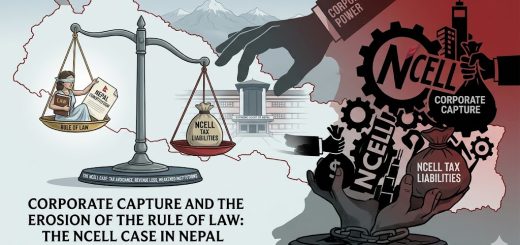
- Avoid bribery, corruption, and regulatory capture
- Support government development policies and programs
- Cooperate with regulatory inspections and investigations
In Nepal, tax evasion remains a significant ethical and economic challenge. The Inland Revenue Department estimates that tax compliance gaps cost Nepal billions of rupees in lost revenue annually — resources that could otherwise fund schools, hospitals, and infrastructure.
4.6 Responsibility towards the Environment
Environmental responsibility has emerged as one of the most urgent dimensions of social responsibility in the 21st century. Climate change, biodiversity loss, deforestation, and water scarcity are global challenges to which business activity has contributed enormously.
According to the United Nations Global Compact (UNGC), businesses should “support a precautionary approach to environmental challenges, undertake initiatives to promote greater environmental responsibility, and encourage the development and diffusion of environmentally friendly technologies.”
According to Paul Hawken, author of The Ecology of Commerce, “Commerce is destroying the living systems that support life on Earth, and only commerce has the reach, scale, and resources to reverse the damage.” This is a powerful argument for business environmental responsibility — the scale of the problem requires the scale of business resources to address it.
Environmental responsibilities of business:
- Comply with all environmental laws and regulations (Nepal’s Environmental Protection Act, 2076 BS)
- Conduct Environmental Impact Assessments (EIA) for major projects
- Minimize waste generation and adopt recycling and waste management practices
- Reduce energy consumption and greenhouse gas emissions
- Use natural resources efficiently and avoid unnecessary depletion
- Prevent and remediate pollution of air, water, and soil
- Support environmental conservation initiatives — afforestation, watershed protection
- Incorporate sustainability into supply chain management
In Nepal, the environmental dimension of CSR is particularly critical given the country’s exceptional biodiversity, glacial water resources, and vulnerability to climate change. Businesses operating in tourism, hydropower, mining, manufacturing, and agriculture have a direct impact on Nepal’s natural environment and bear a correspondingly direct responsibility for its protection.
5. Business Ethics and Social Responsibility in the Nepalese Context
Nepal’s business environment presents particular ethical challenges and opportunities:
i. Corruption and Bribery: Transparency International’s Corruption Perception Index consistently ranks Nepal among countries where business-government interactions are prone to corrupt practices. Ethical businesses in Nepal face the challenge of operating honestly in a sometimes corrupt environment — often at a competitive disadvantage in the short term.
ii. Labour Rights: Nepal’s large informal economy means that many workers — in agriculture, domestic service, and small trade — are not covered by formal labour protections. Ethical businesses in the formal sector can set standards that gradually raise the floor for the entire economy.
iii. Environmental Pressures: Nepal’s rapid urbanization, road construction boom, and hydropower development are generating serious environmental impacts. Businesses in these sectors bear significant ethical responsibility for environmental stewardship.
iv. Consumer Awareness: Nepal’s consumer rights movement is still developing. Many consumers — particularly in rural and semi-urban areas — lack the information and legal literacy to assert their rights. Ethical businesses fill this gap through honest dealing and good after-sales practice.
v. CSR as Investment: Increasingly, Nepali companies — particularly banks and financial institutions — are recognizing that CSR activities are not just moral obligations but strategic investments that build brand loyalty, community goodwill, and regulatory favour.
Conclusion
Business ethics and social responsibility are not constraints on business success — they are conditions for it. A business that is honest with its customers retains them. One that treats its employees with respect and dignity retains them. One that contributes to community well-being earns goodwill that protects it in times of adversity. One that operates within the law and pays its taxes maintains the trust of government and the public.
According to R. Edward Freeman, “The stakeholder theory of the firm says that it is possible to do business ethically and make money at the same time. The challenge is not to choose between doing right and doing well — it is to understand that in the long run, they are the same thing.”
For NEB Grade 11 students in Nepal, this chapter is both a moral education and a practical one. The businesses that Nepal needs — ones that can generate sustainable growth, meaningful employment, and shared prosperity — will only be built by people who understand that good ethics is not the enemy of good business. It is its foundation.
As Mahatma Gandhi observed, “There is enough in the world for everyone’s need, but not enough for everyone’s greed.” In those words lies the entire case for business ethics and social responsibility — the recognition that sustainable prosperity depends on restraint, fairness, and the willingness to see others as partners rather than obstacles.
Prepared for NEB Grade 11 Business Studies — Chapter 5: Business Ethics and Social Responsibility Aligned with the National Curriculum Framework 2076, Curriculum Development Centre, Sanothimi, Bhaktapur