The Nepalese Economy
Economics — Grade 11 | Unit 5 | NEB Nepal
Introduction
Nepal’s economy is one of the most fascinating and complex in Asia — a landlocked nation of extraordinary geographic and cultural diversity, straddling the boundary between the world’s two most populous countries, yet itself among the poorest in the region. Unit 5 of NEB Grade 11 Economics moves from the theoretical frameworks of earlier units to the concrete realities of Nepal’s own economic experience. It covers Nepal’s macroeconomic overview, its natural resources (water, forest, minerals), agriculture, manufacturing and tourism industries, and transportation and communication. Understanding Nepal’s economy is not merely an academic requirement — it is essential preparation for economic citizenship in the country where students will live, work, and vote.
1. Review of Nepal’s Economy: Contemporary Features and Macroeconomic Indicators
1.1 Overview of Nepal’s Economy
Nepal is classified as a Least Developed Country (LDC) by the United Nations and a low-income developing economyby the World Bank. Despite significant progress over the past three decades — poverty reduction, improved human development indicators, and political transformation — Nepal faces persistent structural challenges.
Key macroeconomic indicators (approximate, recent years):
| Indicator | Value |
|---|---|
| GDP (nominal) | ~NPR 5.2 trillion (approx. USD 40 billion) |
| GDP per capita | ~USD 1,300–1,400 |
| GDP growth rate | 4–5% annually |
| Inflation rate | 6–8% |
| Poverty rate | ~20% (national poverty line) |
| HDI | ~0.601 (medium human development) |
| Remittances (% of GDP) | ~25–27% |
| Trade deficit | High — imports greatly exceed exports |
| Foreign exchange reserves | Equivalent to ~7–8 months of imports |
1.2 Contemporary Features of Nepal’s Economy
i. Dominance of Services Sector: Services account for approximately 57–60% of GDP — driven by trade, finance, real estate, government services, and tourism. This high services share reflects the underdevelopment of manufacturing rather than advanced industrialization.
ii. Agriculture as Primary Employer: Despite contributing only approximately 25–28% of GDP, agriculture employs approximately 60% of the workforce — reflecting the sector’s extremely low productivity and the slow pace of structural transformation.
iii. Remittance Dependence: Nepal’s economy is uniquely dependent on remittances from migrant workers — approximately 3.5–4 million Nepalis work abroad, primarily in India, Gulf countries, Malaysia, and Korea. Remittances of approximately USD 9–10 billion annually constitute the largest source of foreign exchange and a primary driver of household consumption and poverty reduction.
According to the Nepal Rastra Bank, “Remittances have been the single most important driver of Nepal’s poverty reduction over the past two decades — they have raised household incomes, financed children’s education, and enabled investment in housing and small businesses.”
iv. High Trade Deficit: Nepal imports far more than it exports — with a merchandise trade deficit of approximately USD 12–14 billion annually. Major imports include petroleum products, vehicles, machinery, chemicals, and consumer goods. Major exports include carpets, pashmina, herbs and essential oils, and handicrafts.
v. Underdeveloped Manufacturing Sector: Industry (including manufacturing and construction) contributes approximately 12–15% of GDP — well below the share in comparably-developed Asian economies. Nepal’s manufacturing is dominated by food processing, textiles, carpets, and construction materials.
vi. Low Domestic Investment: Nepal’s gross capital formation (investment) as a share of GDP is approximately 25–28% — low relative to the investment needed for rapid growth, and partly financed by remittances rather than domestic savings.
vii. Hydropower Potential as Strategic Asset: Nepal’s rivers — fed by Himalayan snowmelt — represent an estimated 83,000 MW of theoretical hydropower potential, of which approximately 42,000 MW is technically and economically feasible. Developing this potential is Nepal’s most significant economic opportunity.
viii. Federal Structure: Nepal’s 2072 BS Constitution established a three-tier federal structure — federal, provincial, and local governments — significantly reshaping economic governance, resource allocation, and development planning.
2. Natural Resources of Nepal
2.1 Water Resources
Nepal’s water resources are among its most significant natural assets and economic opportunities.
Importance of Water Resources:
i. Hydropower Generation: Nepal’s rivers — originating in the Himalayas and draining into the Gangetic Plain — have enormous hydropower potential. According to the Water and Energy Commission Secretariat (WECS), Nepal has an estimated 83,000 MW theoretical and 42,000 MW technically feasible hydropower potential — making it one of the richest hydropower nations in the world relative to its size.
ii. Irrigation: Nepal’s agricultural productivity depends critically on irrigation. The Terai’s fertile plains, watered by the Koshi, Gandaki, Karnali, and Mahakali rivers, are Nepal’s agricultural heartland.
iii. Drinking Water Supply: Nepal’s rivers and groundwater resources are the primary source of drinking water for both urban and rural populations.
iv. Tourism: Rivers attract domestic and international tourists — rafting, kayaking, and wilderness expeditions generate significant tourism revenue.
v. Export Potential: Nepal exports electricity to India — and large-scale export is anticipated as hydropower development accelerates. The Nepal-India Power Trade Agreement provides the framework for cross-border electricity trade.
Current Situation of Water Resources:
Nepal has made significant progress in hydropower development — total installed capacity reached approximately 2,800 MW by 2081 BS, with major projects under construction (Upper Tamakoshi, Budhigandaki, and others). Despite this progress, Nepal frequently experiences power shortages in dry season months (November–March) when river flows are lower.
Problems of Water Resources:
i. Seasonal variability: River flows are much higher during monsoon (June–September) and much lower in dry season — creating hydropower production variability that is difficult to manage without storage reservoirs.
ii. Underdevelopment: Only a tiny fraction of Nepal’s hydropower potential has been developed. Large-scale development requires enormous capital investment that Nepal struggles to mobilize domestically.
iii. Environmental degradation: Deforestation in watershed areas increases erosion and sedimentation in rivers — reducing the lifespan and efficiency of hydropower reservoirs and irrigation systems.
iv. Glacial Lake Outburst Floods (GLOFs): Climate change is causing glaciers to retreat, forming glacial lakes that can suddenly burst, causing catastrophic floods downstream — a growing risk to infrastructure and communities.
v. Cross-border water disputes: Nepal shares major river systems with India and China — and disputes over water rights, dam construction, and flood management have periodically created diplomatic tensions.
2.2 Forest Resources
Nepal’s forests cover approximately 44–45% of the country’s total land area — a remarkable proportion that reflects both the country’s geography and its community forestry achievements.
Importance of Forest Resources:
i. Watershed protection: Forests protect watersheds, regulate water flow, prevent erosion, and maintain the health of river systems on which both agriculture and hydropower depend.
ii. Biodiversity conservation: Nepal’s forests — ranging from subtropical Terai forests to alpine meadows — support extraordinary biodiversity, including approximately 2% of the world’s flowering plants, 8% of birds, and charismatic megafauna including tigers, rhinoceroses, and snow leopards.
iii. Fuelwood and timber: Approximately 70–80% of Nepal’s energy consumption comes from biomass (fuelwood, agricultural residue, animal dung) — mostly collected from forests. Timber is used in construction.
iv. Non-timber forest products (NTFPs): Medicinal herbs, mushrooms, bamboo, rattan, resin, and other products provide income for rural communities, particularly in hill and mountain areas.
v. Carbon sequestration: Forests absorb carbon dioxide — Nepal’s forest cover represents a significant carbon sink and potential source of revenue through carbon credits under international climate agreements.
vi. Tourism: Nepal’s national parks and conservation areas — Chitwan, Bardia, Langtang, Sagarmatha (Everest), Annapurna — are primary tourism destinations, with forests and wildlife as the key attraction.
Current Situation and Community Forestry:
Nepal’s Community Forestry Program — which transfers management rights over forest areas to local communities — is internationally recognized as a success story. Over 19,000 Community Forest User Groups manage approximately 2.3 million hectares of forest, combining conservation with livelihood generation.
Problems of Forest Resources:
i. Deforestation and degradation: Despite progress in community forestry, deforestation continues in areas without effective community management — driven by agricultural expansion, fuelwood collection, and illegal logging.
ii. Fuelwood dependence: Nepal’s dependence on fuelwood for energy causes deforestation and indoor air pollution from burning. Transitioning to clean energy (electricity, LPG, biogas) is essential but requires sustained investment.
iii. Encroachment: Agricultural encroachment into forest land — particularly in the Terai — reduces forest cover and biodiversity.
iv. Forest fires: Dry season forest fires — increasing with climate change — destroy forests and release carbon.
v. Invasive species: Non-native plant species invade forests, reducing biodiversity and ecosystem productivity.
2.3 Mineral Resources
Nepal’s geology — created by the collision of the Indian and Eurasian tectonic plates — produces diverse mineral deposits, though their exploitation remains limited.
Types of Mineral Resources in Nepal:
i. Metallic minerals: Iron ore, copper, zinc, lead, cobalt, nickel, and titanium deposits exist in various regions. The most significant known deposits are in Ramechhap (iron), Taplejung (copper/zinc), and various hill districts.
ii. Non-metallic minerals: Limestone (abundant — extensively mined for cement production), marble, slate, quartzite, talc, magnesite, and dolomite. Limestone-based cement is one of Nepal’s most important domestic industries.
iii. Energy minerals: Coal deposits exist in Dang, Palpa, and Mustang — though of limited commercial quality. No significant petroleum or natural gas deposits have been found.
iv. Precious and semi-precious stones: Rubies, sapphires, tourmaline, and garnets — found in mountain districts, particularly in Ganesh Himal and Dolpa areas.
Importance and Potential:
According to the Department of Mines and Geology, Nepal, “Nepal’s mineral potential remains largely unexplored — comprehensive geological mapping has not been completed for many areas, and investment in exploration and extraction has been limited.”
Nepal’s mineral wealth could contribute significantly to export earnings and domestic industrial development — but requires capital, technology, and regulatory frameworks that are still developing.
Problems of Mineral Resources:
i. Limited exploration: Detailed geological survey and mapping is incomplete — the full extent of Nepal’s mineral wealth is unknown.
ii. Infrastructure constraints: Remote location of many mineral deposits makes extraction expensive — requiring roads, power, and logistics that are absent.
iii. Environmental concerns: Mining, if poorly regulated, causes severe environmental damage — to watersheds, forests, and local communities. Nepal’s regulatory capacity is limited.
iv. Capital and technology scarcity: Large-scale mineral extraction requires capital and technology that Nepal lacks domestically — requiring foreign investment that has been slow to materialize.
v. Policy and regulatory uncertainty: Inconsistent mining policy, unclear royalty frameworks, and bureaucratic delays discourage investment in mineral exploration and extraction.
3. Agriculture
3.1 Characteristics of Nepal’s Agriculture
Agriculture is the foundation of Nepal’s economy — the primary livelihood of the majority of the population and the sector most directly linked to poverty reduction.
i. Subsistence orientation: Most Nepali farming is subsistence-oriented — producing primarily for household consumption rather than the market. Market-oriented commercial farming is growing but remains a minority of production.
ii. Small landholdings: Average farm size is approximately 0.7 hectares — declining with each generation due to inheritance-based land fragmentation. Small plots limit mechanization, investment, and productivity.
iii. Dependence on monsoon: Nepal’s agriculture depends heavily on monsoon rainfall (June–September). Drought or irregular monsoon causes significant production variability and food insecurity.
iv. Low productivity: Nepal’s agricultural yields — kg per hectare for rice, wheat, maize, and other crops — are among the lowest in South Asia. This reflects limited use of improved seeds, fertilizers, irrigation, and mechanization.
v. Geographic diversity: Nepal’s three ecological zones — Terai (plains), Hills, and Mountains — produce different crops under very different conditions. Terai produces the majority of food grains; Hills produce fruits, vegetables, and cash crops; Mountains produce niche products (potatoes, barley, herbs, yak products).
vi. Seasonality: Most cropping is seasonal — dependent on monsoon timing and limiting the number of crops per year without irrigation.
vii. Labour intensity: Farming is predominantly labour-intensive — relying on family and hired manual labour rather than mechanization.
3.2 Importance of Agriculture in Nepal
i. Employment: Agriculture employs approximately 60% of Nepal’s workforce — it is the primary livelihood of most rural households.
ii. Food security: Nepal’s domestic food production — primarily rice, wheat, maize, and millet — is the foundation of national food security. Food self-sufficiency in grains fluctuates with weather conditions.
iii. Foreign exchange: Agricultural exports — tea, coffee, cardamom, herbs, vegetables — generate foreign exchange, though Nepal’s agricultural trade balance is negative overall (imports of sugar, edible oils, and other commodities exceed agricultural exports).
iv. Raw materials for industry: Agriculture supplies raw materials to Nepal’s food processing, textile, and other industries — linking agricultural development to industrial growth.
v. Rural livelihoods: For the majority of Nepal’s rural population, farming is the primary or supplementary source of income, food, and livelihood security.
3.3 Modernization and Commercialization of Agriculture
Nepal’s agriculture must transform from subsistence to commercial production to reduce rural poverty and meet the food needs of a growing urban population.
Modernization involves adopting improved inputs and technologies — high-yielding varieties, fertilizers, pesticides, irrigation, mechanization — to raise crop yields and productivity.
Commercialization involves shifting from subsistence production to market-oriented farming — growing crops for sale, responding to market prices, and integrating with value chains.
Strategies for agricultural modernization in Nepal:
- Expanding irrigation (the Melamchi Water Supply Project; irrigation canals in Terai)
- Promoting use of improved seeds and fertilizers
- Mechanization — tractors, threshers, power tillers in Terai
- Developing agricultural market infrastructure — rural roads, cold storage, market centres
- Agricultural extension services — training farmers in improved techniques
- Contract farming and agribusiness development — linking farmers to markets
3.4 Problems of Agriculture in Nepal
i. Land fragmentation: Inheritance-based subdivision creates plots too small for efficient farming. Land reform — addressing tenancy, ceiling, and fragmentation — remains politically contentious.
ii. Inadequate irrigation: Only approximately 30% of Nepal’s cultivable land is under assured irrigation — most Terai and Hill farming depends on rainfall.
iii. Limited access to markets: Poor road connectivity, particularly in hill and mountain districts, makes it difficult for farmers to sell produce at competitive prices. Post-harvest losses are high due to lack of storage and cold chain.
iv. Climate change impacts: Irregular monsoon, unseasonal frosts, and shifting seasons increase agricultural risk and variability. Nepal’s mountain farmers are among the world’s most vulnerable to climate change.
v. Outmigration of agricultural labour: Large-scale emigration of young men to foreign employment has reduced agricultural labour availability — particularly for tasks requiring physical strength — leaving farming increasingly to women and elderly.
vi. Soil degradation: Inappropriate use of fertilizers and pesticides, combined with deforestation and poor land management, degrades soil quality and reduces long-term agricultural productivity.
vii. Pest and disease: Crop losses from pests and diseases — including rice blast, wheat rust, and vegetable diseases — reduce yields significantly.
4. Manufacturing and Tourism Industries
4.1 Manufacturing Industry
Concept: Manufacturing refers to the processing of raw materials into finished goods using labour, machinery, and technology. Nepal’s manufacturing sector is small but economically significant — contributing approximately 5–7% of GDP in manufacturing proper (construction adds a further 8–10%).
Types of Manufacturing Industries in Nepal:
i. Cottage and handicraft industries: Small-scale, often home-based production of traditional goods — dhaka weaving, thangka painting, wood and metal crafts, pottery. These industries are culturally significant and employ thousands of artisans, particularly women.
ii. Small and medium enterprises (SMEs): Food processing (rice mills, flour mills, oil mills, fruit processing), garment and readymade clothing, brick kilns, furniture, and basic engineering goods.
iii. Large-scale industries: Cement (Nepal’s largest industrial sub-sector), sugar, tobacco, edible oils, and beverages. The Birgunj Industrial Corridor and Hetauda Industrial District are primary manufacturing locations.
iv. Export-oriented industries: Carpet weaving (Nepal is among the world’s largest exporters of handmade wool carpets), pashmina products, and readymade garments.
Importance of Manufacturing:
- Diversifies the economy beyond agriculture and services
- Creates formal employment with higher productivity than agriculture
- Generates export earnings
- Develops entrepreneurship and industrial skills
- Reduces import dependence through import substitution
Problems of Manufacturing in Nepal:
i. Energy supply: Despite hydropower progress, manufacturing industries face higher electricity costs and occasional shortages — reducing competitiveness.
ii. Infrastructure: Poor road connectivity to industrial sites, inadequate ports (as a landlocked country), and transit bottlenecks through India increase logistics costs.
iii. Labour costs and skills: Rising wages combined with skill shortages increase production costs. Skilled technical workers are scarce — many emigrate for better opportunities abroad.
iv. Limited capital: Access to affordable long-term industrial finance is constrained — interest rates in Nepal are among the highest in the region.
v. Competition from imports: Cheaper Indian and Chinese manufactured goods — facilitated by Nepal’s open trade regime with India — make it difficult for domestic manufacturers to compete.
vi. Small domestic market: Nepal’s population of approximately 30 million with low per capita income limits the domestic market for manufactured goods.
4.2 Tourism Industry
Tourism is one of Nepal’s most important and distinctive economic sectors — drawing visitors from around the world to experience the Himalayas, trekking routes, cultural heritage, and wildlife.
Types of Tourism in Nepal:
i. Adventure tourism: Mountaineering (Everest, Annapurna, Manaslu, and hundreds of other peaks), trekking (Everest Base Camp, Annapurna Circuit, Langtang, Upper Mustang), rafting, paragliding, and bungee jumping. Adventure tourism attracts high-spending foreign visitors.
ii. Cultural tourism: Kathmandu Valley’s UNESCO World Heritage Sites (Pashupatinath, Boudhanath, Swayambhunath, Changu Narayan, the Durbar Squares) draw millions of visitors seeking Nepal’s unique Hindu-Buddhist cultural heritage.
iii. Wildlife and nature tourism: Chitwan National Park, Bardia National Park, Koshi Tappu Wildlife Reserve — offering wildlife safaris, bird watching, and nature experiences.
iv. Religious tourism (pilgrimage): Nepal’s Hindu and Buddhist religious sites attract pilgrims from Nepal, India, and internationally — particularly Pashupatinath (Hindu), Lumbini (Buddha’s birthplace — UNESCO World Heritage Site), and Muktinath.
v. Community-based tourism (homestay): Growing importance — rural communities offer authentic cultural experiences, generating income at the local level.
Importance of Tourism:
i. Foreign exchange earnings: Tourism is a major source of foreign exchange — approximately USD 500–700 million in normal years (severely disrupted by COVID-19 2020–21, recovering since).
ii. Employment: Tourism employs approximately 1 million people directly and indirectly — in hotels, trekking companies, transport, handicrafts, and services.
iii. Infrastructure development: Tourism drives investment in roads, airports (Tribhuvan International, Pokhara International), hotels, and communications in destinations.
iv. Conservation incentive: Tourism provides economic justification for conservation — making Nepal’s wildlife and landscapes economically valuable.
Problems of Tourism in Nepal:
i. Seasonal concentration: Most tourists visit October–November (autumn) and March–April (spring) — the shoulder seasons create boom-bust employment cycles.
ii. Geographic concentration: Tourism is concentrated in Kathmandu Valley, Pokhara, Chitwan, and the Everest and Annapurna regions — many areas receive few tourists despite significant potential.
iii. Environmental impacts: High tourist concentrations in sensitive mountain and heritage areas generate waste, trail degradation, and pressure on fragile ecosystems.
iv. Leakage: Much tourism revenue leaks out of Nepal through foreign-owned airlines, international hotel chains, and import of tourism supplies — limiting domestic multiplier effects.
v. Vulnerability to external shocks: Nepal’s tourism has been severely disrupted by the 2015 earthquake, COVID-19, and concerns about mountaineering accidents — demonstrating the sector’s vulnerability to events beyond Nepal’s control.
5. Transportation and Communication
5.1 Transportation
Importance of Transportation in Economic Development:
According to Michael Todaro, “Transportation infrastructure is a prerequisite for economic development — without roads, railways, and air connections, markets cannot function, inputs cannot reach producers, and products cannot reach consumers.”
Transportation plays multiple economic roles:
- Integrates markets: Connecting production centers with consumption centers, enabling specialization and exchange
- Reduces transaction costs: Cheaper, faster transport lowers the cost of moving goods and people
- Facilitates agricultural marketing: Connecting farmers to markets reduces post-harvest losses and improves prices
- Enables industrial development: Reliable transport is essential for industrial supply chains and distribution
- Supports tourism: Nepal’s tourism depends critically on air access (Tribhuvan International Airport) and road networks to trekking and wildlife destinations
- Contributes to national integration: Roads connect remote communities to the national economy and governance system
Types of Transportation in Nepal:
i. Road transport: Nepal’s primary mode — approximately 30,000+ km of roads (Strategic Road Network + Local roads), though quality varies enormously. The Mahendra Highway (East-West) and the Prithvi, Arniko, and Siddhartha highways are strategic routes. Road connectivity in hill and mountain districts remains severely limited.
ii. Air transport: Essential for mountain districts inaccessible by road and for international tourism. Nepal has Tribhuvan International Airport (Kathmandu) and Pokhara International Airport (opened 2023) as major international gateways, plus approximately 50 domestic airports and airstrips.
iii. Ropeways and cable cars: Used in some hill areas for transporting goods — though limited in scale. Tourist cable cars (Chandragiri, Manakamana) are commercially operated.
iv. River transport: Limited to certain Terai river sections — not a major national mode.
Current Situation and Problems:
Nepal’s road connectivity has expanded significantly since the 1950s, when Nepal had virtually no modern roads. However:
i. Poor road quality: Many roads are unpaved, prone to landslides and washouts in monsoon, and impassable in winter — creating seasonal connectivity gaps.
ii. Geographic constraints: Nepal’s mountainous terrain makes road construction extraordinarily expensive and technically challenging.
iii. Limited rail: Nepal has a short, narrow-gauge rail link (Janakpur Railway) and a cross-border rail link to Raxaul (India) — but no national rail network.
iv. High logistics costs: Nepal’s landlocked status and mountainous terrain make transportation costs among the highest in South Asia — significantly increasing the cost of goods and reducing industrial competitiveness.
v. Inadequate maintenance: Roads deteriorate rapidly without adequate maintenance — and maintenance funding is consistently insufficient.
vi. Traffic congestion: Kathmandu’s road network is severely congested — with vehicle numbers growing far faster than road capacity.
5.2 Communication
Importance of Communication in Economic Development:
Communication enables the exchange of information that makes economic coordination possible — price signals, market information, business instructions, government services, and financial transactions all depend on communication infrastructure.
According to Todaro, “Modern communication technology is a powerful equalizer — it enables remote communities to access market information, financial services, education, and health care that geography previously made impossible.”
Types of Communication in Nepal:
i. Telecommunications (mobile and internet): Nepal’s most dynamically expanding communication sector. Mobile phone penetration has grown from near-zero in 1990 to approximately 130+ subscribers per 100 people today. Internet penetration — driven by mobile broadband — has transformed access to information and financial services.
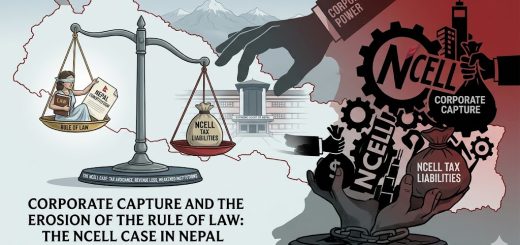
Nepal Telecom and Ncell are the primary operators, providing voice, SMS, and data services. According to Nepal Telecommunications Authority, mobile broadband covers the majority of Nepal’s settled areas.
ii. Internet and e-commerce: Nepal’s internet users have grown rapidly — enabling e-commerce (Daraz, SastoDeal), digital financial services (eSewa, Khalti, ConnectIPS), remote education, telemedicine, and government e-services.
iii. Postal services: Nepal Post provides basic postal services — though declining in importance relative to digital communication and private courier services.
iv. Broadcasting (radio, television): Radio reaches areas that mobile networks do not — particularly important for agricultural extension, health messaging, and disaster warning. Nepal has hundreds of FM radio stations and multiple television channels.
Role in Economic Development:
i. Agricultural marketing: Farmers with mobile phones can check market prices in Kathmandu before selling — reducing exploitation by middlemen and improving farmer incomes. Studies across South Asia consistently show that mobile phone access improves farmer prices by 5–10%.
ii. Financial inclusion: Mobile banking and digital payment platforms (eSewa, Khalti) extend financial services to unbanked rural populations — enabling remittance receipt, savings, and payments without physical bank branches.
iii. Education: Digital connectivity enables distance learning — critical in a country where geography prevents many children from accessing quality schools.
iv. Tourism: Online booking platforms, travel information websites, and social media marketing enable Nepal’s tourism sector to reach global audiences directly.
v. Government services: E-governance initiatives enable citizens to access government services (land registration, tax filing, vehicle registration) without travelling to district headquarters.
Problems of Communication in Nepal:
i. Rural-urban digital divide: While urban areas have good connectivity, many rural communities — particularly in hill and mountain districts — have limited or no broadband access.
ii. Internet cost: Broadband internet remains expensive relative to incomes — limiting access for lower-income households and small businesses.
iii. Infrastructure vulnerability: Nepal’s communication infrastructure is vulnerable to natural disasters — earthquakes, floods, and landslides regularly disrupt networks.
iv. Limited domestic content: Most digital content and services are designed for global or Indian markets — limiting the relevance of digital access for Nepali-language users.
6. Summary: Nepal’s Economic Development Challenges and Opportunities
Challenges:
- Breaking out of the remittance-consumption growth model toward productive investment and industrialization
- Transforming subsistence agriculture into commercial, high-productivity farming
- Developing hydropower as a growth driver and export earner
- Improving road connectivity to reduce logistics costs and integrate remote areas
- Managing rapid urbanization while preventing environmental degradation
- Retaining skilled graduates in Nepal rather than losing them to foreign employment
- Building institutional quality — reducing corruption, improving governance, and enforcing contracts
Opportunities:
- 83,000 MW hydropower potential — enough to power all of South Asia
- Unique tourism assets — Himalayas, cultural heritage, wildlife — with significant untapped potential
- Young workforce — if equipped with skills and given productive employment opportunities
- Strategic location between India and China — two of the world’s fastest growing economies
- Growing digital infrastructure — enabling leapfrogging of conventional development stages
- Remittance wealth — if channelled into productive investment rather than consumption
Conclusion
Nepal’s economy is at a critical juncture — having made remarkable progress in poverty reduction and human development over the past three decades, but facing the challenge of transitioning from remittance-fueled consumption growth to productive investment-led development. Understanding Nepal’s natural resources, agricultural structure, industrial base, tourism potential, and infrastructure realities is essential for every student who will engage with Nepal’s economic future — as a worker, entrepreneur, policymaker, or citizen.
As Mahbub ul Haq observed, “The real wealth of nations is its people.” Nepal’s greatest resource — more than its rivers, its forests, or its minerals — is its 30 million people. The challenge and the opportunity of Nepal’s economic development is to create an economy that enables every Nepali to live a productive, dignified, and fulfilling life.
Prepared for NEB Grade 11 Economics — Unit 5: The Nepalese Economy Aligned with the National Curriculum Framework 2076, Curriculum Development Centre, Sanothimi, Bhaktapur